








Electrical Terminal Box Guide: Choosing the Right Enclosure Type

Electrical installations often require secure locations for connecting, routing, and protecting conductors. Terminal boxes provide a practical enclosure for these connections while helping organize wiring and simplify access for installation or maintenance. However, selecting the right box requires more than considering its dimensions. Environmental exposure, material, mounting location, cable entries, and required protection all need to be evaluated.
An electrical terminal box can be used in many different settings, from controlled indoor electrical rooms to demanding industrial and outdoor environments. Understanding the conditions surrounding the installation is therefore essential when determining which enclosure design is appropriate.
What Is an Electrical Terminal Box?
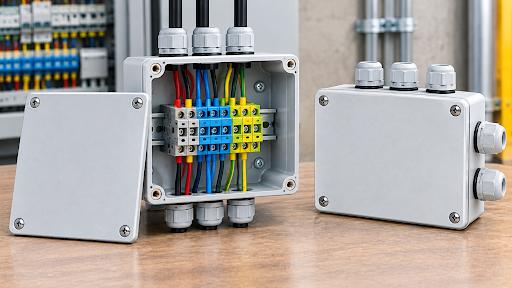
An electrical terminal box is an enclosure designed to provide a protected space for electrical terminals, conductor connections, and related wiring components. It can help keep connections organized while providing a physical barrier between electrical components and the surrounding environment.
Terminal boxes can be used where multiple conductors need to be connected or distributed. Their configuration may include removable covers, doors, terminal blocks, cable entries, conduit connections, and mounting provisions depending on the application.
The required size should provide enough internal working space for the intended components without creating unnecessary congestion. Accessibility is also important because technicians may need to inspect, test, or service connections after installation.
Why Environmental Protection Matters
Electrical connections can be affected by moisture, dust, dirt, chemicals, and other environmental conditions. The enclosure should therefore be selected according to the location where it will operate.
ANSI/NEMA 250 establishes enclosure Types for electrical equipment rated up to 1,000 volts and specifies protection against particular environmental conditions. The standard includes Types intended for indoor locations as well as Types designed for indoor or outdoor applications.
For example, Type 1 is intended for indoor use and provides protection against access to hazardous parts and falling dirt. Type 2 adds protection against dripping and light splashing water. Type 3 is intended for indoor or outdoor applications and addresses conditions such as windblown dust, rain, sleet, snow, and external ice formation.
This demonstrates why enclosure selection should be based on actual site conditions rather than simply choosing a commonly used design.
Selecting the Appropriate Enclosure Type
When specifying an electrical terminal box, start by identifying the environmental conditions at the installation site.
An indoor location with limited exposure to moisture may require a different Type than an outdoor installation exposed to rain and snow. Industrial facilities may introduce additional concerns such as dust, oil, coolant, or frequent cleaning.
For locations exposed to substantial water, higher levels of protection may be necessary. Type 4, for example, addresses hose-directed water, while Type 4X provides additional corrosion-resistance considerations. The appropriate classification depends on the actual conditions and applicable requirements.
NEMA explains that enclosure features and Type ratings apply when the enclosure is completely and properly installed.
Consider the Material and Construction
Material selection is another important consideration. Metal enclosures can provide mechanical strength and durability, while stainless steel or other corrosion-resistant materials may be considered for environments where chemical or moisture exposure is a concern.
However, material alone does not determine the enclosure's environmental Type. The complete construction, design, components, and applicable testing requirements must be considered.
The enclosure should also be compatible with the equipment and terminals installed inside it. Internal clearances, mounting arrangements, cable-entry positions, and cover or door configurations can all affect practical usability.
Cable and Conduit Entry Points
The entry points used for cables and conduits deserve particular attention. Incorrectly positioned or poorly sealed entries can compromise the overall installation and make conductor routing more difficult.
Before selecting an electrical terminal box, determine how many cables or conduits will enter the enclosure and where those entries need to be positioned. Consider the direction of incoming wiring, available installation space, and whether future additions may be required.
NEMA 250 also addresses enclosure construction features such as conduit hubs, closure plates, equipment openings, and drainage openings.
This makes entry-point planning an important part of the overall enclosure specification.
Installation and Maintenance Considerations
A suitable enclosure still needs to be installed correctly. Mounting arrangements, covers, fasteners, seals, cable entries, and other components should be selected and installed according to the applicable requirements.
NEMA states that covered enclosures and equipment are to be installed and used in accordance with manufacturer instructions and the applicable requirements of the National Electrical Code.
Maintenance access should also be considered during design. Technicians should be able to reach terminals and connections without unnecessary difficulty. Regular inspection can help identify damaged seals, loose hardware, corrosion, or other conditions that could affect long-term performance.
NEMA Ratings and IP Ratings Are Different
It is also important to distinguish NEMA classifications from IP ratings. Although both systems describe aspects of enclosure protection, they are not interchangeable numerical scales.
NEMA states that IP ratings are not a substitute for enclosure Type ratings under NEC Section 110.28. NEMA classifications address specific environmental conditions and can include considerations beyond the ingress characteristics represented by an IP code.
Therefore, project specifications should identify the applicable classification system and requirements before an enclosure is selected.
Conclusion
Choosing an electrical terminal box involves evaluating more than physical dimensions. Environmental exposure, enclosure material, cable entries, mounting arrangements, internal space, accessibility, and maintenance requirements should all be considered before installation. For projects with specific environmental, dimensional, or configuration requirements, NEMA box ratings can help guide the selection of an enclosure that corresponds to the intended operating conditions. The rating should always be evaluated alongside manufacturer instructions and applicable electrical requirements. A carefully specified terminal box can make wiring connections easier to organize, inspect, and maintain while providing an appropriate level of environmental protection for the installation.


