








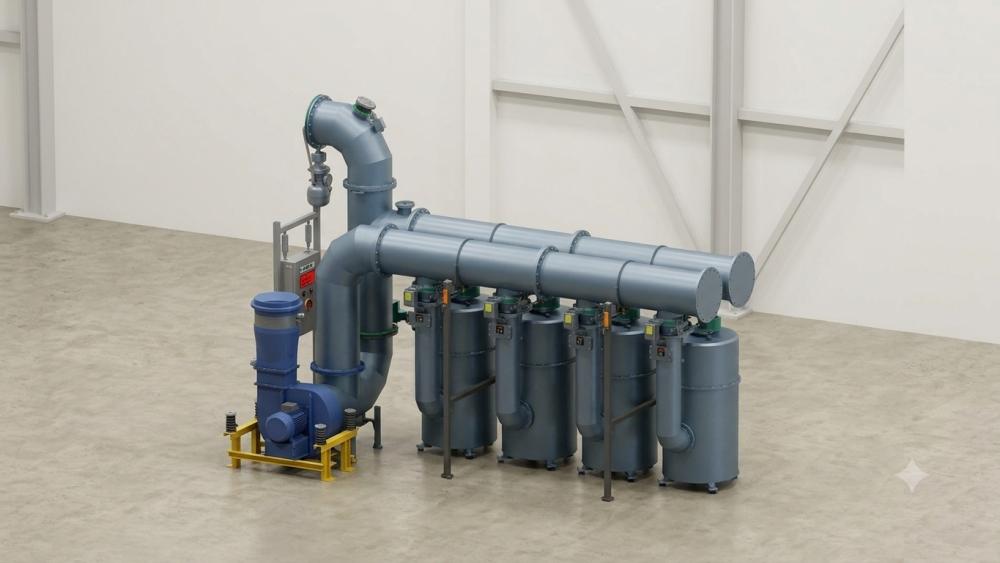
Cost Comparison: NBC Filtration vs Other Air Purification

A naval base shelters personnel during a nearby industrial fire and command staff debate whether to commit to a purpose-built NBC Filtration System or rely on upgraded commercial air purifiers and HEPA retrofits. The decision hinges on long-term protection, operational continuity and the true lifecycle cost of real NBC threats.
NBC threats—radioactive particulates, biological aerosols and toxic chemical vapours—remain a critical concern for military, industrial and critical infrastructure facilities. An NBC Filtration System is engineered to protect occupants against that full threat set through validated particulate capture, chemical adsorption and system-level controls. This article compares costs and value between dedicated NBC filtration and other air purification options, emphasising engineering, operational and lifecycle considerations rather than headline purchase price.
Understanding the technology differences
- NBC Filtration System: Multi-stage design combining coarse prefilters, HEPA (H13/H14) particulate removal, and deep or impregnated activated carbon beds for gas-phase adsorption, integrated into sealed housings, positive-pressure control, redundant blowers and monitoring.
- Commercial HEPA purifiers: Effective for particulates and biological aerosols but lack validated gas-phase adsorption capacity and airtight housings.
- Activated carbon standalone units: Reduce certain VOCs and odours; performance varies widely by carbon type, impregnation and bed depth.
- HVAC retrofits: Installing higher-MERV filters or HEPA retrofits can improve particulate protection but often need blower upgrades and do not guarantee chemical protection.
Initial capital cost vs functional capability
Initial purchase price for full NBC systems is higher due to rugged housings, certified HEPA modules, engineered carbon beds and control logic. By contrast, commercial HEPA units and HVAC retrofits appear cheaper up front. However, this is a limited view: NBC systems are engineered and certified for agent-specific adsorption, redundancy and sealed operation—critical where human life and mission continuity depend on predictable performance.
Lifecycle cost drivers
- Filter and adsorbent replacement frequency: Carbon beds exposed to higher concentrations or humidity require more frequent replacement—this is a predictable expense that must be modelled during procurement.
- Maintenance and testing: Certified systems require periodic integrity tests, breakthrough testing and witnessed commissioning—ongoing costs that sustain reliability.
- Disposal and hazardous-waste handling: Saturated HEPA filters and carbon beds contaminated with radiological or chemical agents demand controlled disposal procedures, adding recurring cost.
- Energy and blower wear: Higher pressure drops from HEPA and carbon beds increase energy consumption and maintenance; purpose-built systems account for this in blower sizing, reducing unplanned costs.
- Downtime and mission risk: Indirect costs from compromised operations, evacuations or health impacts can far exceed equipment cost—an essential consideration for defence and critical infrastructure applications.
Operational value and risk mitigation
A dedicated NBC Filtration System provides certified protection metrics (HEPA capture efficiency, adsorbent breakthrough time), positive pressure control and redundancy. These features reduce operational risk and provide predictable endurance under threat. Commercial alternatives may offer partial protection for particulates or short-duration incidents but introduce uncertainty under persistent chemical exposure or high dust loading.
When lower-cost options are acceptable
- Temporary or auxiliary spaces where mission-critical continuity is not required.
- Short-duration, low-concentration events where portable HEPA plus temporary carbon panels can reduce immediate exposure.
- Staged upgrades: a phased approach where HEPA retrofits precede full NBC installation, provided interim measures are clearly documented and threat assessments accept the residual risk.
Selection factors that affect cost-effectiveness
- Threat profile: agent types (particles vs gases), expected concentrations and duration strongly determine needed investment in carbon bed capacity and HEPA integrity.
- Occupancy and operational criticality: command centres, control rooms and medical facilities have low tolerance for degraded protection.
- Environmental conditions: high dust or humidity increases replacement frequency and lifecycle cost.
- Compliance and certification: projects requiring defence or nuclear certification require higher upfront testing and validation costs but lower operational uncertainty.
- Local logistics: availability of replacement media, hazardous waste disposal and supplier support influence total cost of ownership. For regional context and cost benchmarking, investigate credible local suppliers and documented offers for NBC air filtration system price in india to compare total lifecycle commitments, not just sticker price NBC filtration system price in india.
Buyer’s guide: evaluating value, not just price
- Demand test reports: HEPA efficiency, adsorption breakthrough under representative humidity and concentration, and witnessed commissioning evidence.
- Calculate total cost of ownership: factor replacement cycles, disposal, energy, testing regimes and downtime risk.
- Require redundancy and maintenance access in specifications to avoid costly retrofits later.
- Verify supplier experience with defence or industrial projects and ask for field references.
- Consider modular systems to spread capital costs while allowing phased capability upgrades.
Common procurement mistakes that inflate long-term cost
- Choosing systems based on lowest initial price without considering replacement frequency or disposal costs.
- Neglecting blower and control upgrades when installing higher-efficiency media, causing reduced airflow and hidden operational failures.
- Failing to model worst-case exposure scenarios and adsorbent breakthrough, resulting in emergency upgrades at higher cost.
- Overlooking certified testing and witnessed commissioning, which can lead to unexpected failures and expensive corrective action.
Conclusion
An NBC Filtration System carries a higher initial cost than consumer HEPA purifiers or basic HVAC retrofits, but it delivers validated protection, redundancy and predictable lifecycle costs essential for defence, industrial and critical infrastructure facilities. Effective procurement evaluates total cost of ownership, threat-driven capability requirements and certification evidence rather than headline price alone. Prioritise engineered, tested solutions where occupant safety and mission continuity depend on reliable NBC protection—short-term savings on non-certified options can translate into higher long-term risk and expense.


