








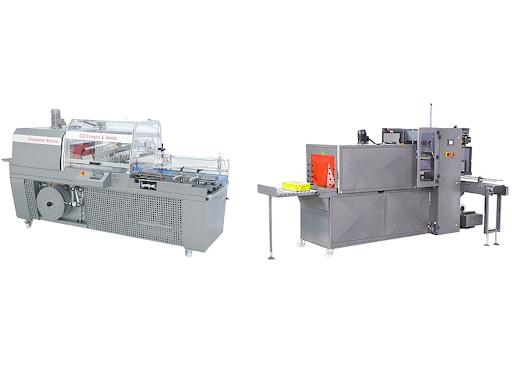
Shrink Film Wrapping Machines in Industrial Packaging Lines

In modern manufacturing and logistics, packaging efficiency and product protection are critical for maintaining competitive supply chains. A shrink film wrapping machine is widely used in industrial packaging lines to wrap products using heat-shrinkable polyethylene (PE), polyolefin (POF), or PVC films. These systems are designed to tightly enclose single or grouped products, ensuring stability, protection, and uniform presentation. According to industrial packaging practices, shrink wrapping is one of the most reliable methods for securing goods across the food, beverage, pharmaceutical, and consumer goods industries. Companies like Maripak USA have developed advanced systems that integrate sealing and heat tunnel technologies into continuous, high-efficiency production lines for scalable industrial use.
Working Principle of Shrink Film Wrapping Machines
A shrink film wrapping machine operates through a structured, automated process. First, products are fed into the system via conveyors, where they are arranged in the required configuration. The machine then wraps a layer of shrink film around the product or bundle and seals it using a sealing bar. After sealing, the packaged product passes through a heat tunnel where controlled hot air is applied. This causes the film to shrink uniformly, tightly conforming to the product’s shape.
This process ensures consistent wrapping quality and eliminates variations commonly seen in manual packaging. Maripak’s industrial systems emphasize precision heating and controlled airflow within tunnels, which improves shrink consistency and reduces film wastage while maintaining high production speeds in continuous operations.
Role of Shrink Film Wrapping Machines in Industrial Packaging Lines
In industrial packaging lines, shrink film wrapping machines play a central role in achieving automation and production efficiency. These systems are often integrated into end-to-end packaging setups that include product feeding, sealing, shrinking, and output handling. This integration reduces the need for manual intervention and ensures a seamless production flow.
High-capacity systems can handle a large number of packages per minute, making them suitable for industries with high-volume output requirements. As highlighted in industrial packaging solutions like Maripak’s equipment range, these machines are engineered to support continuous operation while maintaining consistent sealing strength and film application quality. This makes them highly valuable in fast-moving consumer goods production environments.
Benefits of Using Shrink Film Wrapping Machines
One of the most significant advantages of shrink film wrapping machines is operational efficiency. By automating the wrapping process, manufacturers can significantly reduce labor costs while increasing output speed. This is particularly important in industries where production demand fluctuates but consistency is essential.
Another key benefit is product protection. Shrink-wrapped packaging creates a tight, tamper-evident seal that protects goods from dust, moisture, and external contamination during storage and transportation. Additionally, bundling multiple items together improves logistics efficiency by reducing handling time and optimizing pallet space.
Material efficiency is also improved because these machines precisely control film usage based on product dimensions, minimizing waste and lowering overall packaging costs. Industrial-grade systems are designed to support sustainable packaging goals by optimizing polyethylene film consumption.
Integration and Automation in Modern Packaging Systems
Modern shrink film wrapping machines are built for seamless integration into automated production lines. They can be synchronized with upstream filling or labeling machines and downstream palletizing systems, ensuring an uninterrupted workflow.
This level of automation enhances productivity while reducing dependency on manual labor. It also ensures consistent packaging quality across large production batches, which is essential for maintaining brand reliability in competitive markets.
Conclusion
Shrink film wrapping machines have become an essential component of industrial packaging lines due to their ability to deliver speed, consistency, and protection in a fully automated process. They improve operational efficiency, reduce labor requirements, and ensure high-quality packaging across diverse industries. As manufacturing systems continue to advance toward full automation, the importance of reliable wrapping solutions will only increase. In this evolving landscape, the role of a wrap machine becomes central to achieving efficient and scalable packaging operations supported by modern industrial packaging infrastructure


