








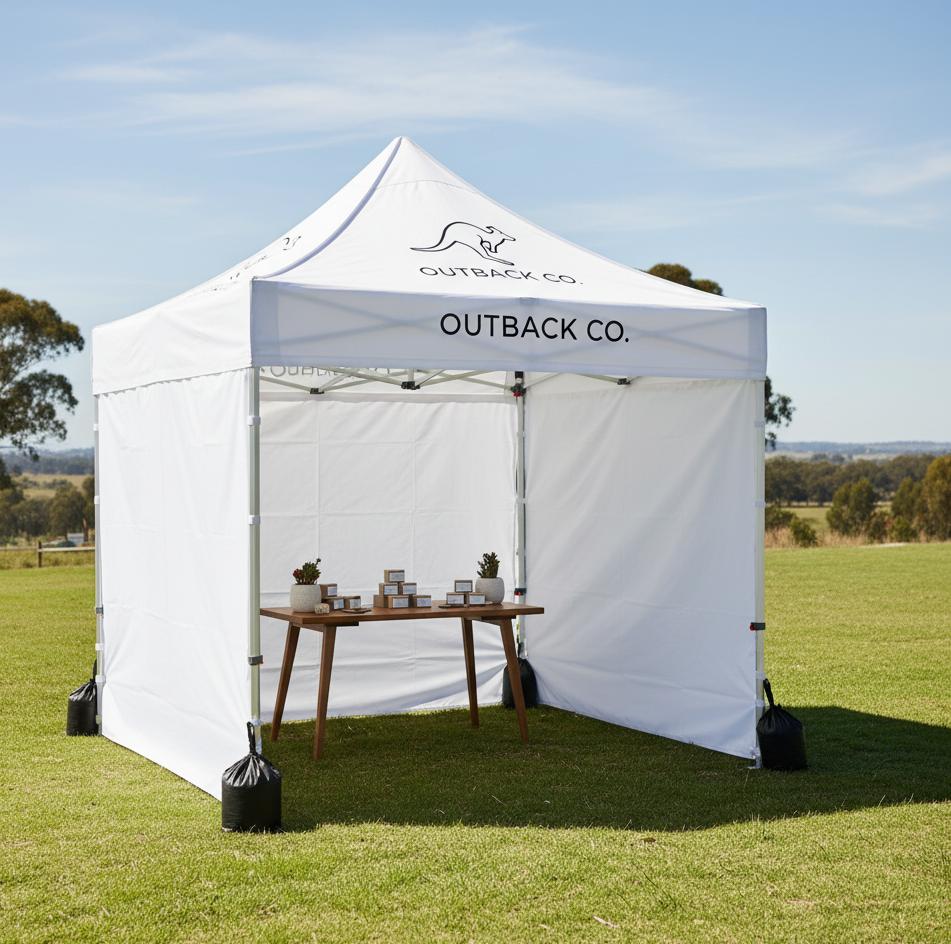
Aussie Weather & Value: Are Low Cost Printed Marquee Walls Durable Enough for the Australian Climate?

If you run a market stall or manage event logistics anywhere in Australia, you know the true meaning of "outdoor branding." It means facing a relentless trifecta: scorching UV rays, sudden wind gusts, and unpredictable downpours.
So, when you see the phrase "Low Cost Printed Marquee Walls," a crucial question immediately springs to mind: Will they survive the Australian summer, or will they fade and tear after one season?
The good news is that durability is not strictly defined by price. It’s defined by material specifications. Here is what you need to know to ensure your budget-friendly investment stands up to the demands of the Aussie climate.
1. The Real Enemy: UV Damage and Fading
In Australia, the sun doesn't just lighten colours; it aggressively breaks down fabric fibres. Fading is the most common reason a 'low cost' wall starts to look prematurely old.
What to Look For:
-
UV Protection: Check the product specifications for fabric that has been treated with a UV-resistant coating. This coating acts as a sunscreen for your print, drastically extending the life and vibrancy of your logo.
-
Quality Dyes: Durable Low Cost Printed Marquee Walls should use high-quality sublimation or digital printing dyes that penetrate the fabric, rather than cheap surface-level screen prints that flake or wash out easily.
The Value Verdict: Investing in a wall with certified UV resistance is the single most important factor for long-term value, even if it adds a fraction to the initial "low cost."
2. Sudden Winds and Fabric Integrity
One moment the air is still, the next, a southerly buster is tearing through the market. Your walls need to be a barrier, not a sail.
What to Look For:
-
Denier (Thickness): Denier (D) measures the fabric's linear mass density. Look for walls made from a robust Denier, such as 600D polyester or higher. This thickness resists abrasion and stress, meaning the fabric itself won't rip easily under tension.
-
Stitching: Examine the product images or description for double-stitched seams. The seams are the weak points, and double stitching provides the structural integrity needed to withstand the force of a sudden gust without failing.
-
Secure Attachments: Ensure the walls have high-quality, continuous Velcro strips and/or reliable zips that securely connect them to the frame and to each other.
3. Protecting Against Rain, Mildew, and Mould
Australian rain ranges from light drizzle to torrential downpour. Your wall needs to protect your goods, and critically, it needs to survive itself after getting wet.
What to Look For:
-
PU Coating: Look for walls with a Polyurethane (PU) coating. This clear plastic layer is applied to the interior of the fabric and is what makes the wall truly waterproof, not just water-resistant.
-
Quick-Dry Material: Polyester is naturally fast-drying. The main threat is mildew and mould, which rapidly degrades both the fabric and the print.
The Value Tip: After any rainy event, always unroll and fully dry your Low Cost Printed Marquee Walls before packing them away. This simple maintenance step costs nothing but adds years to the wall’s lifespan, ensuring your investment remains high-value.
4. Where Does the "Low Cost" Come From?
If the materials are durable, why are they low cost? Often, it comes down to:
-
Standardised Sizing: Efficient manufacturing of common sizes (like 3m x 3m).
-
Streamlined Processes: Using modern digital printing techniques that reduce waste and setup time.
-
Direct Sourcing: Dealing with suppliers like Redmond Outdoor Supplies who manage the manufacturing and supply chain efficiently.
This means you are often getting a durable product thanks to smart supply chains, not cheap materials.
Yes, Low Cost Printed Marquee Walls are durable enough for the Australian climate—provided you check the specifications for UV protection and a robust Denier count. Focus on the material facts, and you will find smart, durable branding that delivers exceptional value.


