








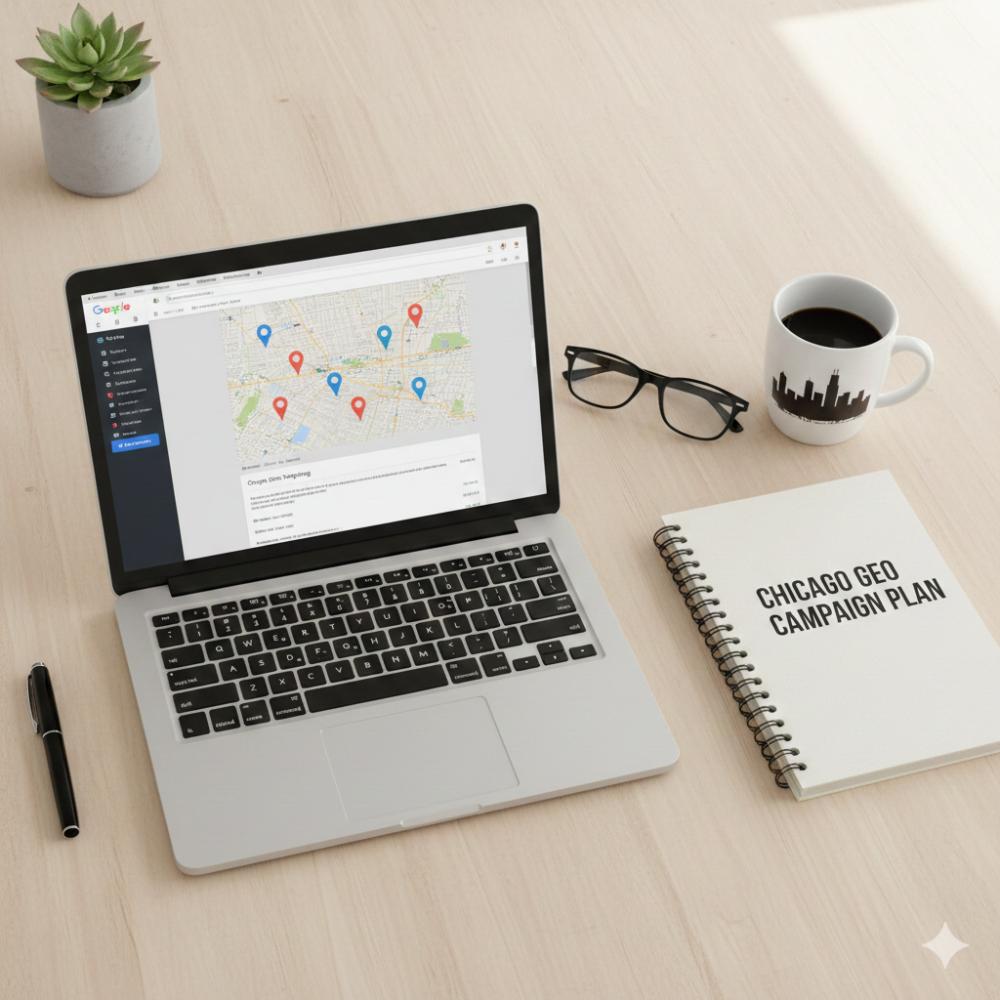
Best Geo Targeting Methods for Chicago Neighborhoods

When it comes to digital advertising, one size definitely does not fit all — especially in a city as diverse as Chicago. Each neighborhood has its own rhythm, customer behavior, and economic pulse. What works in the Loop may not connect in Wicker Park or Hyde Park.
That’s where geo targeting becomes the secret weapon for local advertisers. By tailoring your campaigns to specific neighborhoods, you can reduce wasted spend, increase conversions, and build stronger connections with customers who actually matter.
Why Geo Targeting Matters in Chicago
Chicago isn’t just one market — it’s a collection of micro-markets, each with distinct preferences and search behaviors. The North Side skews toward young professionals and tech-savvy audiences, while the South Side responds better to community-driven, value-focused messages.
If your ads treat all audiences the same, you risk blending into the noise. Geo targeting allows you to show the right message to the right people — where they live, work, and shop.
For local service providers, restaurants, and startups, that’s the difference between clicks and conversions.
1. Neighborhood-Level Targeting
The most effective geo targeting starts at the neighborhood level. Google Ads allows you to target by ZIP codes, cities, or even map-drawn boundaries.
For example, a home cleaning company can run one campaign targeting Lincoln Park and Lakeview using premium messaging, while another focuses on Bridgeport or South Shore with more value-oriented offers.
Each area has its own customer expectations and average order values — neighborhood targeting ensures your ad tone, pricing, and visuals align perfectly.
2. Radius Targeting Around Business Locations
Radius targeting lets you draw a circle (for example, a 5-mile radius) around your store, office, or service zone. This is perfect for businesses that serve customers nearby — like cafes, gyms, clinics, or repair shops.
It helps ensure your ads reach people who are close enough to visit or call. This approach prevents wasted impressions from users who live too far to engage meaningfully.
By setting precise distance limits, you can prioritize visibility where it counts most — within walking or driving range of your location.
3. Custom Location Groups
For multi-location businesses, custom location groups are extremely powerful. You can group together ZIP codes or regions based on performance.
For instance, if certain areas like Gold Coast, Old Town, and River North generate high-value leads, you can create a dedicated campaign for those neighborhoods with higher bids and specific ad messages.
This data-driven segmentation ensures you invest more where returns are strongest — and reduce bids in underperforming areas.
4. Dynamic Ad Copy Based on Location
Geo targeting isn’t only about who sees your ads — it’s also about what they see. Dynamic ad customization allows you to personalize ad copy based on location.
So instead of showing a generic headline like “Top-Rated Roofing Company”, you could show “Trusted Roofing Experts in Lincoln Park”.
This hyper-local personalization instantly captures attention because it feels relevant. Localized language improves click-through rates (CTR) and builds trust before users even visit your website.
5. Layering Demographics With Location Data
Combining geo targeting with demographic filters gives you unmatched precision. You can target audiences based not only on location but also on age, income, and interests.
For example, an upscale salon might focus on higher-income households in Lakeview and Streeterville, while a budget fitness brand might prioritize younger audiences in Avondale or Rogers Park.
This layered targeting ensures every impression has a higher chance of turning into a sale or lead.
6. Performance Monitoring and Optimization
The key to effective geo targeting is continuous optimization. Regularly review which neighborhoods deliver the most clicks, calls, and conversions.
Using Google Ads reports, you can compare ROI across different regions and adjust bids accordingly. Sometimes, just shifting 10% of your budget toward high-performing ZIP codes can double your conversion rate.
A skilled Google Ads Agency in Chicago handles this process efficiently — tracking, testing, and refining every campaign to make sure no ad dollar is wasted.
7. Geo-Fenced Remarketing
One advanced method that’s becoming popular in Chicago is geo-fenced remarketing. This technique allows you to re-engage users who’ve visited a specific location — such as an event, store, or trade show — with tailored follow-up ads.
It’s a smart way to stay top-of-mind with prospects who have already shown interest, reinforcing your message and driving conversions.
Conclusion
In a city as competitive as Chicago, success comes from precision, not just presence. Geo targeting allows businesses to compete smarter by tailoring ads to each neighborhood’s identity and needs.
When managed strategically, it transforms your campaigns from generic to hyper-relevant — improving ROI and customer connection.
With expert insights, real-time optimization, and the right local strategy, your business can dominate search results across Chicago’s neighborhoods — one block at a time.


