








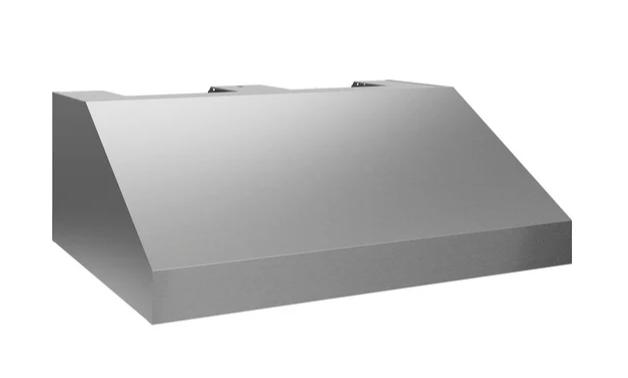
How to Choose the Right Under-Cabinet Range Hoods for Your Kitchen

Kitchen ventilation is an important part of creating a comfortable and functional cooking environment. Cooking can release smoke, grease, steam, heat, and odors, making an effective ventilation system especially valuable for busy kitchens. Unlike large island or wall-mounted designs, an under-cabinet model fits directly beneath existing cabinetry, helping preserve valuable wall and storage space.
When comparing under-cabinet range hoods, homeowners should look beyond appearance. Width, airflow, ventilation configuration, filter design, controls, lighting, and installation requirements all influence how well a hood will perform in a particular kitchen.
Match the Hood to Your Cooking Area
The first step is determining the appropriate width. The hood should provide suitable coverage for the cooking surface while fitting comfortably beneath the surrounding cabinetry.
The collection includes multiple sizes, including 30-, 36-, 42-, 48-, 60-, and 72-inch options, providing flexibility for different kitchen layouts.
For smaller or standard cooking areas, a compact model can preserve cabinet space while still providing dedicated ventilation. Larger cooking surfaces may require wider equipment to capture rising exhaust effectively.
Compare Airflow Capacity
CFM, or cubic feet per minute, indicates how much air a hood's blower can move. Choosing the appropriate capacity depends on cooking habits, appliance output, kitchen configuration, and the amount of smoke or heat typically produced.
The current collection includes options ranging from approximately 280 and 400 CFM to models rated at 600, 700, 1,300, and 2,000 CFM.
Higher airflow is not automatically better for every kitchen. A homeowner who mainly prepares light meals may have different requirements from someone who regularly sears meat, stir-fries, grills, or cooks with high heat. Matching airflow to actual cooking needs can provide more practical performance.
Decide Between Ducted and Convertible Designs
Ventilation configuration is another major consideration. Ducted hoods move exhaust through ductwork and outside the home, while convertible models can offer flexibility for different installation arrangements.
The collection contains both ducted and convertible options. Several models are also designed to accommodate ductless operation, giving homeowners additional choices when exterior ventilation is difficult to install.
Before selecting a model, check the existing duct route, required duct dimensions, electrical requirements, and installation location. Planning these details in advance can prevent compatibility issues during installation.
Consider Filters and Cleaning
Filters capture grease and other particles from cooking exhaust, making their design important for ongoing maintenance. A hood that is easy to access and clean can simplify regular kitchen upkeep.
Stainless steel is also commonly selected for kitchen ventilation because it provides a durable surface that can complement modern appliances. The collection features numerous stainless steel models alongside black and satin stainless finishes.
Regularly cleaning filters and exterior surfaces can help maintain both appearance and ventilation performance.
Think About Controls, Lighting, and Kitchen Design
Everyday usability matters just as much as technical specifications. Fan controls should be easy to reach and operate, while multiple speed settings can provide greater control over ventilation during different cooking tasks.
Lighting is another useful feature because it can improve visibility across the cooking surface. For kitchens where cabinetry limits overhead illumination, integrated hood lighting can provide practical additional illumination.
Low-profile designs may also be preferable when homeowners want ventilation without making the hood the dominant visual feature of the kitchen.
Evaluate the Complete Installation
A hood should be considered as part of the entire kitchen ventilation system rather than as an isolated appliance. Check cabinet dimensions, mounting requirements, ducting, electrical connections, clearance requirements, and access for future maintenance.
It is also useful to consider how the hood will coordinate with the range, cabinets, backsplash, and other appliances. A carefully selected model can provide ventilation while maintaining a cohesive kitchen design.
For homeowners comparing under-cabinet range hoods, evaluating these factors together can make the selection process considerably easier. Rather than choosing solely according to appearance or maximum airflow, consider the actual cooking style, available space, ventilation configuration, maintenance requirements, and installation conditions.
Conclusion
Effective kitchen ventilation should balance performance, practicality, and design. At Smart Home Luxury, we offer a broad selection that allows homeowners to compare sizes, airflow capacities, finishes, and ventilation configurations according to their individual kitchen requirements. Our goal is to make it easier to evaluate the available options and choose a ventilation solution that works naturally with the cooking space.


